The Ultimate African Safari Tipping Guide: Travel with Confidence with Kubwa Five Safaris
Embarking on a journey across the wilderness of East and Southern Africa is the realization of a lifelong dream. You sit in an open 4×4 vehicle, watching a pride of lions move silently through the golden grass, or listening to the deep, resonant trumpet of an elephant echoing across an ancient riverbed. It is an experience that permanently alters your perspective on the natural world.
Behind every seamless wildlife encounter, every perfectly mixed sundowner cocktail, and every pristine canvas tent tucked away in the bush is a dedicated team working around the clock. From the master field guide to the back-of-house teams, these hospitality professionals are the true heartbeat of the African travel industry.
As an international traveler stepping into this unique ecosystem, navigating local customs can feel confusing. One of the most common questions travelers ask our team at Kubwa Five Safaris is: “How do we handle gratuities correctly without overthinking it?”
Understanding African safari tipping etiquette allows you to show appreciation smoothly and ensures your generosity directly empowers local communities. This comprehensive safari tipping guide breaks down exactly how much to tip safari guide teams, tracker crews, and hospitality staff across the continent, so you can focus entirely on your journey and truly experience the magic of the wild.
The Philosophy of Tipping in the African Safari Industry
To confidently apply an African safari tipping etiquette, it helps to understand the socio-economic framework of the regions you are visiting. In many parts of East and Southern Africa, tourism is the primary driver of rural employment, wildlife conservation, and community development.
An Extension of Gratuity, Not a Wage Replacement
A common misconception among Western travelers is that tipping exists to compensate for low base wages, similar to the restaurant industry model in North America. In the reputable safari industry and specifically among Kubwa Five Safaris’ handpicked lodge and operational partners, this is not the case.
Our ground teams, guides, and lodge staff are paid professional base salaries that conform to or exceed regional hospitality standards. They receive housing, meals, medical considerations, and extensive on-the-job training.
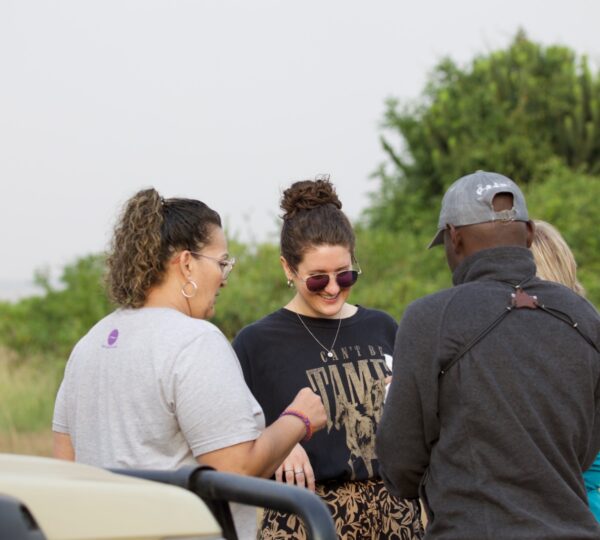
Instead, tipping on safari in Africa is viewed as an acknowledgment of exceptional merit. It is a direct reward for the long hours, deep passion, and profound emotional energy that safari staff invest in your holiday. Safari shifts are intense; guides and camp crews often live away from their families for weeks or months at a time, working 14-hour days to ensure your safety. A tip is your way of saying, “I see your hard work, I value your expertise, and I appreciate how you have brought this continent to life for me.”
The Ripple Effect of Your Generosity
When you tip a safari worker, your money does not stop in their pocket. It creates a powerful, positive economic ripple effect across rural African communities. A single safari guide or lodge housekeeper often supports an extended family of up to eight to ten people. Your gratuity helps pay for school fees for younger siblings, buys livestock for a family farm, funds medical care for elderly relatives, and injects vital capital into local village economies.
By understanding tipping as a form of direct community empowerment, it ceases to feel like a transactional chore and instead becomes a meaningful part of your sustainable travel footprint.
Demystifying the Math: Standard Tipping Benchmarks
While tipping is entirely voluntary and ultimately depends on your satisfaction with the service, having clear, numerical benchmarks prevents awkward guesswork at check-out.
The industry standards below are calculated per day, based on your entire traveling group (not per individual traveler). If you are a couple or a family traveling together in one vehicle, you pool your money to meet these daily rates.
| Staff Position | Recommended Gratuity Range (Per Group / Per Day) | Delivery Method |
|---|---|---|
| Lead Safari Guide / Driver | $20 – $30 USD | Direct personal envelope at departure |
| Spotter / Field Tracker | $10 – $15 USD | Direct personal envelope at departure |
| General Lodge Staff | $15 – $20 USD | Centralized communal tip box at checkout |
| Specialized Camp Chef / Butler | $15 – $20 USD | Direct personal envelope at departure |
| Transfer Drivers | $5 – $10 USD (Per Transfer) | Handed directly upon arrival at destination |
| City Hotel Porters | $1 – $2 USD (Per Bag) | Handed directly after bag delivery |
Let’s break down each of these roles in detail to understand exactly what goes into their daily responsibilities.
1. The Lead Safari Guide / Driver
Your guide shapes your safari story from day one. They are your driver, your tracking expert, your wildlife encyclopaedia, your storyteller, and your protector. They wake up before dawn to check the vehicles, navigate treacherous terrain, and spend hours intensely concentrated on reading the bush to find elusive predators like leopards and cheetahs. Because of their immense responsibility and high level of professional training, they receive the highest tier when calculating how much to tip safari guide teams.
2. The Spotter or Field Tracker
Commonly found on safaris in Southern Africa (such as South Africa, Botswana, and Zimbabwe), track-less vehicles utilize a dedicated spotter who sits on a specialized seat mounted to the very front hood of the 4×4. While the guide manages the driving and radio communication, the tracker searches the sand for fresh paw prints, notices broken branches, and tracks wildlife on foot into dense brush. If your itinerary includes a tracker, they should be tipped separately from the guide.
3. General Lodge and Camp Staff
This category represents the invisible army that makes a luxury safari lodge function smoothly. It includes the housekeepers who turn down your bed and place hot water bottles under your sheets, the kitchen crew preparing gourmet meals in the middle of the wilderness, the maintenance workers operating the solar grids, and the armed night guards who escort you safely to your tent after dark.
Instead of tipping these individuals separately, reputable lodges feature a central “Communal Tip Box” at the main reception desk. At the end of your stay, money dropped into this box is aggregated and divided equally among all back-of-house staff, ensuring the unsung heroes are fairly rewarded. This standard format forms the foundation of the Tipping Lodge Staff East Africa guidelines.
4. Specialized On-Site Staff
If you are staying at an ultra-luxury enclave, a private villa, or a mobile fly-camping setup, you may be assigned a dedicated private butler or a personal camp chef. Because these individuals provide exclusive, highly personalized one-on-one service throughout your stay, it is customary to tip them directly at the end of your visit, rather than relying solely on the communal tip box.
Regional Nuances: East Africa vs. Southern Africa
While the baseline metrics remain relatively consistent, Africa is a vast continent made up of distinct nations, each with its own micro-cultures, logistical realities, and banking systems. When traveling with Kubwa Five Safaris, your itinerary may span multiple regions. Understanding these subtle differences is highly useful.
East Africa (Kenya, Tanzania, Uganda, Rwanda)
East Africa is the classic home of the safari, dominated by expansive national parks and long-distance driving itineraries.
- The “One Guide” Concept: In East Africa, it is highly common for the same Kubwa Five guide to meet you at the airport on Day 1 and remain with you for your entire 10-day journey, driving you between different national parks in one East African country. In this scenario, you do not tip daily. You keep a running tally and present a lump sum envelope to your guide on the final day before they drop you back at the airport and then fly to another East African country if you are visiting more than one East African country. You will have a different guide in each country.
- Lack of Trackers: Due to dense vegetation patterns and specific park regulations in East Africa, trackers sitting on vehicle hoods are rarely used. Your driver fulfills both roles, meaning your full guiding gratuity goes directly to them.
Southern Africa (South Africa, Botswana, Namibia, Zimbabwe)
Southern Africa relies heavily on fly-in safaris, where guests take small bush planes directly into private, unfenced wildlife concessions.
- The Lodge-Centric Model: In Southern Africa, you change guides every time you move to a new lodge. A guide from Lodge A will look after you for three days, and then you fly to Lodge B, where a new guide takes over. Therefore, you must tip your guide at the end of each specific lodge stay before flying out.
- The Tracker Dynamic: As mentioned, trackers are a standard fixture in Southern African open vehicles. Always budget for both a guide and a tracker envelope when checking out of a Southern African Trips.
Specialized Adventure Activity Tipping
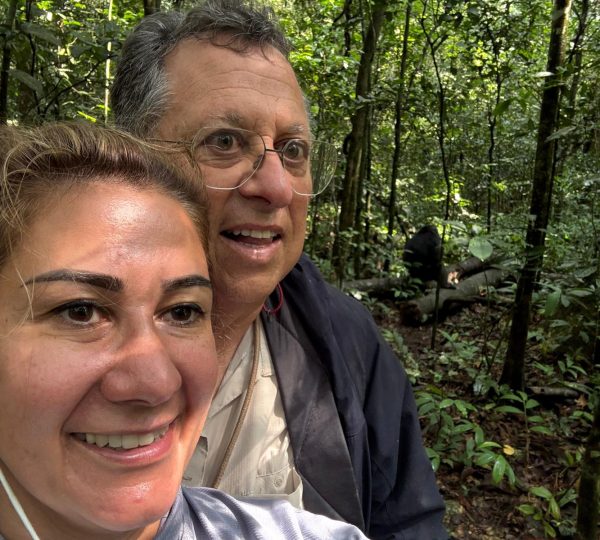
For many Kubwa Five travelers, a safari is combined with high-intensity wilderness adventures, such as tracking mountain gorillas through equatorial rainforests or climbing Africa’s highest peaks. These excursions require massive human logistics and highly specialized guiding skills.
Primate Trekking (Gorillas & Chimpanzees)
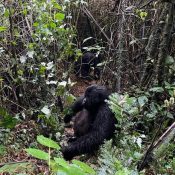
Trekking to see mountain gorillas in Uganda’s Bwindi Impenetrable Forest or Rwanda’s Volcanoes National Park is an intense physical endeavor. You are led into dense, steep jungles by a multi-layered security and guiding team. These gorilla trekking tipping guidelines outline how to structure your tips for a single trek:
- Lead Rangers and Guides ($20 – $40 USD total from your group): This is given to the main guide who leads your specific trekking group of eight people, provides educational briefings, and communicates with the scouts.
- Trackers and Security Guards ($5 – $10 USD per tracker/guard from your group): Advanced trackers head into the forest at the break of dawn to locate the gorilla families before you arrive, while armed park rangers protect the perimeter. There are usually 2-4 trackers/guards per trek.
- Personal Porters ($10 – $15 USD directly to your porter): At the trailhead, you have the option to hire a local porter from the surrounding village to carry your heavy backpack and camera gear and assist you up slippery muddy slopes. Hiring a porter is one of the most effective ways to support local community economies directly. You pay a flat standard hiring fee (approx. $15-$20), and it is customary to add a $10-$15 tip at the end of the trek for their hard work.
Currency Logistics: Cash is King in the Bush
One of the most practical challenges of being deep in the African wilderness is managing currency. When you are staying in a safari lodge hours away from the nearest town, you cannot simply walk down the street to an ATM. Preparation is absolutely essential.
The Rule of US Dollars ($)
Throughout East and Southern Africa, the US Dollar (USD) is widely accepted as an international safari currency. You can comfortably tip your guides, trackers, and lodge attendant using USD. However, local banking institutions across Africa enforce incredibly strict rules regarding the physical quality of American currency:
- The 2013 Cutoff: Banks in Africa will strictly reject any US dollar bills that were printed before the year 2013. When preparing for your trip, inspect every bill and ensure they feature modern security designs printed post-2013.
- Physical Condition: Bills must be crisp, clean, and unblemished. Any notes that have small tears, ink stamps, heavy creasing, or writing on them will be rejected by local forex bureaus and banks, rendering them useless to the person you give them to.
- Denominations: Bring a wide mix of small bills ($1, $5, $10, $20 and $50 notes). If you only carry large $100 bills, you will find it incredibly difficult to tip appropriately for smaller services like airport portage or local village crafts.
When to Use Local Currency
While USD is universally loved, using local currency is highly appreciated and often more practical for ground staff living in rural areas who may find it difficult to travel to a major city bank to exchange foreign money.
- In South Africa, the South African Rand (ZAR) is preferred everywhere. It is highly recommended to withdraw Rand from a secure airport ATM upon arrival for all your tipping needs.
- In Kenya, Tanzania, and Uganda, using local shillings is excellent for small tipping moments (porters, drivers) and for shopping in local community markets.
Can I Tip via Credit Card?
Most established, luxury safari lodges allow you to add your general lodge staff tip to your final credit card bill upon checkout. While this is highly convenient for your cash flow, it has two major downsides:
- Delayed Payouts: Card tips must clear corporate accounting systems and are typically paid out to staff on monthly or quarterly payroll cycles, meaning they do not receive the cash immediately.
- Exclusion of Guides: Most lodges do not allow you to add your guide’s tip to a credit card bill, as guides operate independently of the property’s immediate food/room assets. Always carry physical cash for your guides and trackers.
Step-by-Step: The Etiquette of Handing Over a Tip
Tipping is not just about the money; it is about the manner in which it is delivered. In African culture, hospitality is deeply personal, and showing respect during the transactional elements of your trip cements a bond of mutual dignity.
The Envelope Method
The most polite way to present a tip to a safari guide, tracker, or private butler is to place the physical cash inside a small, sealed envelope. You can write a brief, handwritten note on the front expressing your gratitude (e.g., “Thank you for showing us the magic of Africa. From the Smith Family.”). This keeps the gratuity private, professional, and deeply personal.
The Two-Handed Handshake
When handing your envelope to your guide or a staff member, look them in the eye and use the traditional African handshake. In many African cultures, passing an object or shaking hands with your right hand while gently placing your left hand on your own right forearm or wrist is a profound sign of deep respect and honor. It signifies that your gesture comes straight from the heart.
The Timing
- For Guides and Trackers: Present your envelope during your very final conversation with them, usually right before you step out of the safari vehicle at the airstrip or airport terminal.
- For Lodge Staff: Drop your anonymous envelope into the communal tip box on the morning of your departure, right as you settle your incidental beverage or laundry bill at the front reception desk.
Frequently Asked Questions (FAQ)
Q: Can I give more than what is being mentioned here?
A: Yes, definitely. Our guide outlines the standard industry averages, but there is no upper limit. If your crew went above and beyond, feel free to give more.
Q: Can I tip in Euros or Pounds?
A: Yes, you can certainly tip in USD, Euros, or Pounds. However, please ensure the bills are crisp, clean, and un-torn, as local banks can be strict about accepting damaged foreign currency.
The USD Gold Standard: While Euros and Pounds are widely accepted, US Dollars (USD) remain the preferred international currency across most of Africa.
Local Currency Alternative: Tipping in the local currency (like Kenyan or Tanzanian Shillings) is also highly appreciated, especially for lodge staff who shop locally.
Q: What if my guide was sub-par? Do I still have to tip?
A: Absolutely not. Tipping is a reward for excellence. If your guide was dismissive, unsafe, or unprofessional, you are under no obligation to tip them. However, before you leave, we strongly urge you to speak privately with the lodge manager or contact your Kubwa Five Safaris travel designer immediately. Safaris are highly dynamic, and we want to correct any service issues in real-time to save your holiday.
Q: Should I tip if a lodge describes itself as “fully all-inclusive”?
A: Yes. In the luxury safari world, “all-inclusive” refers to your luxury accommodation, all gourmet meals, soft drinks, house wines, spirits, and daily scheduled game drives. It does not encompass staff gratuities. Tipping guidelines remain identical even at the highest-end, ultra-luxury properties.
Q: Can I give gifts instead of cash? (e.g., clothing, tech, shoes)
A: While gifting functional items like high-quality binoculars, outdoor jackets, or smartphones is warmly appreciated especially by trackers and junior camp staff, it should never replace a cash tip. Cash is what pays for rent, groceries, and school fees. Think of physical gifts as an optional, heartwarming bonus for a guide you formed a profound personal connection with.
A Practical Packing Summary for Your Safari Wallet
To ensure you are fully prepared before you board your flight to Africa, use this quick financial checklist:
- Call your bank to authorize international debit/credit card usage in East and Southern Africa.
- Secure roughly $30 to $40 USD per day, per traveler, in cash to form your overall tipping budget.
- Double-check that every single US dollar bill is printed after the year 2013.
- Verify that all bills are entirely free of rips, tears, stamps, marks, or heavy ink stains.
- Bring a pack of 5–10 small, blank white paper envelopes for organizing your end-of-stay tips.
- Carry a simple pen to write personal thank-you notes on your envelopes.
Your Adventure is Waiting with Kubwa Five Safaris
When you look back on your time in Africa years from now, you will certainly remember the spectacular wildlife, the vast crimson sunsets, and the pristine landscapes. But above all, you will remember the people. You will remember the warm laughter of your guide as they uncovered a hidden cheetah track, the beautiful local songs sung by the camp crew around a roaring fire, and the flawless hospitality that made you feel completely at home in the heart of the wild.
By traveling with Kubwa Five Safaris, you are choosing an organization that values integrity, respects local cultures, and champions the incredible humans who make tourism possible.
Now that you are fully equipped with the knowledge to navigate safari etiquette flawlessly, there is only one thing left to do. Pack your bags, open your mind, and prepare to cross the threshold into the extraordinary.