The Ultimate Guide to Birding Hides in South Africa
South Africa is globally renowned as a premier safari destination, celebrated for its iconic Big Five. However, for those who look up to the canopy or scan the reeds, it transforms into an absolute avian paradise. Boasting a national list of over 850 bird species—including highly localized endemics and spectacular seasonal migrants—the country offers some of the finest bird watching on earth.
While driving through national parks yields fantastic sightings, the absolute pinnacle of South African birding is experienced from a bird hide. These intentionally designed structures camouflage human observers, allowing you to watch completely natural, undisturbed wildlife behaviors at point-blank range.
Whether you are a seasoned twitcher chasing rare endemics or a wildlife photographer seeking the perfect reflection shot, this comprehensive guide explores the absolute best birding hides in South Africa, practical strategies for success, and regional highlights.
Why Bird Hides Alter Your Viewing Experience
Stepping inside a well-positioned bird hide completely shifts the dynamic of wildlife viewing. In a vehicle, engine noise and movement can startle skittish species. From a hide, you become an invisible part of the landscape.
Unprecedented Proximity
Many hides are constructed directly over waterholes, active mudflats, or major river courses. Birds that would otherwise scatter at the sight of a human will land just feet away from your viewing slot. This proximity allows you to observe complex behaviors up close, from intricate preening rituals to intense territorial displays and dramatic hunting sequences.
Ideal Conditions for Photography
For photographers, bird hides provide a stable, shaded environment to shoot from. Many modern South African hides are built with a low-angle perspective, placing your camera lens at eye level with water birds. The shade protects your gear from direct heat, reduces glare, and allows you to use tripods or beanbags for razor-sharp stability.
Comfort and Patience
Birding is a game of patience. Standard viewing from an open vehicle can become exhausting under the harsh African sun. Hides offer benches, roof protection, and a cool breeze. They provide a calm space to unpack a flask of coffee, open a field guide, and systematically tick off species as they arrive.
Top Birding Hides in Kruger National Park
Kruger National Park is a massive bastion of biodiversity, welcoming over 500 bird species within its boundaries. While the park is massive, its network of strategically placed bird hides provides some of the highest concentration birding anywhere in Africa.
Lake Panic Bird Hide (Skukuza Region)
Arguably the most famous bird hide in South Africa, Lake Panic is situated just a short drive from the bustling Skukuza Rest Camp. Built on stilts directly over a permanent reservoir on the Sabie River system, this hide offers an unmatched theater of aquatic birdlife.
- Key Species: African Jacana, Malachite Kingfisher, Giant Kingfisher, Striated Heron, Black Crake, and the elusive White-backed Night Heron.
- What Makes it Special: The hide faces west, making it an extraordinary location for dramatic morning photography as the rising sun illuminates the reeds opposite the structure. Beyond birds, it is a reliable spot to watch hippos jostling for territory and massive Nile crocodiles sunning themselves on half-submerged logs.
Sable Dam Hide (Phalaborwa Region)
Located in the wilder, more arid northern-central region of Kruger near Phalaborwa gate, Sable Dam Hide offers a completely unique feature: it doubles as an overnight wilderness hide.
- Key Species: Saddle-billed Stork, Comb Duck, African Fish Eagle, and various migratory waders during the summer months.
- What Makes it Special: During the day, it operates as a standard, highly productive bird hide. By night, it can be booked exclusively for overnight stays, allowing you to sleep in the wild and wake up to the dawn chorus ringing out right across the water.
Sweni Hide (Satara Region)
Perched comfortably on the banks of the Sweni River near N’wanetsi, this hide looks out over an expansive riverbed flanked by towering green trees.
- Key Species: Kori Bustard (in the surrounding plains), White-crowned Lapwing, Verreaux’s Eagle-Owl, and African Green Pigeon.
- What Makes it Special: The surrounding riverine forest acts as a magnet for passerines and raptors alike, making it a fantastic spot to look for birds that prefer thick canopy cover rather than just open water.
The Zululand Birding Route: A Photographer’s Dream
KwaZulu-Natal’s Zululand region boasts an incredibly diverse array of ecosystems, ranging from coastal dunes and estuaries to dry acacia savannahs and sand forests. It is widely regarded as one of the most vital regions for birding infrastructure in South Africa.
mKhuze Game Reserve Hides
uMkhuze (part of the iSimangaliso Wetland Park) is a legendary holy grail for bird photographers. The reserve features several world-class hides, including Kumasinga, kuMahlala, and Inhlonhlela.
| Hide Name | Primary Habitat Type | Standout Avian Target Species | Best Time to Visit |
|---|---|---|---|
| Kumasinga | Dry savannah waterhole | Pink-throated Twinspot, Green-winged Pytilia | Mid-winter (dry season) |
| kuMahlala | Ephemeral pan | African Pygmy Goose, Lesser Jacana | Early summer rains |
| Inhlonhlela | Deep-water lakeside | Pel’s Fishing Owl, Great White Pelican | Year-round |
- The Kumasinga Experience: Kumasinga Hide is globally legendary among wildlife photographers. During the dry winter months, this small waterhole becomes the only water source for miles. Thousands of tiny, colorful passerines—including waxbills, twinspots, and canaries—descend in vast, swirling flocks to drink, creating a spectacular visual showcase.
Ndumo Game Reserve Hides
Situated right on the border of Mozambique, Ndumo Game Reserve is a subtropical paradise that holds the highest density of bird species relative to its geographical size in South Africa.
- Key Hides: Nyamithi Pan Hide.
- Key Species: Pel’s Fishing Owl, African Broadbill, Pink-backed Pelican, and Flappet Lark.
- The Nyamithi Pan Experience: The hide overlooks a massive, shallow pan lined with dead trees. It provides an incredible backdrop for photographing roosting water birds, massive colonies of storks, and hundreds of pink flamingos shifting through the shallows.
Western Cape and Coastal Birding Hides
Moving away from the subtropical east, the Western Cape provides an entirely different suite of bird life, heavily dominated by coastal shorebirds, pelagic visitors, and unique Fynbos endemics.
Geelbek Hide (West Coast National Park)
Located inside the scenic West Coast National Park, the Geelbek Hide sits directly on the edge of the sprawling Langebaan Lagoon.
- Key Species: Curlew Sandpiper, Grey Plover, Bar-tailed Godwit, Greater Flamingo, and Eurasian Whimbrel.
- What Makes it Special: This hide is a premier hub for observing Palearctic migrants. Every summer, tens of thousands of waders fly all the way from the Siberian tundra to settle here. The hide is completely dependent on tides; birders must time their arrival precisely for incoming high tides, which gently push the wading birds off the mudflats right up to the hide windows.
Rondevlei Nature Reserve Hides (Cape Town)
Situated right within Cape Town’s suburban matrix, Rondevlei is an incredibly accessible gem featuring a string of well-maintained wooden hides along a series of coastal wetlands.
- Key Species: Malachite Kingfisher, African Marsh Harrier, Greater Flamingo, and Cape Shoveler.
- What Makes it Special: It offers an immediate urban escape where local birders can easily track Cape wetland dynamics without traveling hours into the deep interior wilderness.
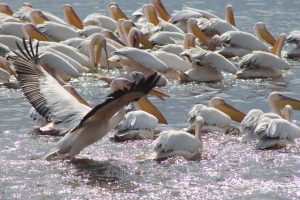
Flamingoes in Lake Nakuru national park
Essential Etiquette and Code of Conduct inside Hides
Because you are sharing a small, confined space with other enthusiasts and sitting very close to sensitive wildlife, maintaining proper hide etiquette is vital to ensure an enjoyable experience for everyone involved.
1. Absolute Silence is Golden
Sound travels exceptionally well over flat water. Whispering is critical. Avoid rustling plastic snack bags, turn your phone to absolute silent mode, and ensure your camera’s digital confirmation beeps are completely disabled.
2. Manage Lens and Body Movement
Birds have exceptional motion detection. If you quickly poke a massive, bright telephoto lens out of a hide window, you will clear out the waterhole instantly. Always move your camera slowly, keep your body back in the shadows of the hide, and never lean your arms or head all the way out of the viewing slots.
3. Share the Space Unselfishly
If a hide is incredibly busy and you have secured the absolute best viewing angle or photographic bench, be mindful of others arriving behind you. Once you have captured your shots, gently slide over to let fellow birders share the view.
4. Respect the Perimeter Rules
Never step out of the designated hide structure onto the surrounding banks. Not only does this terrify the birds and ruin the experience for everyone else inside, but many of these waters are home to dangerous crocodiles and hippos.
Insider Tips for Elite Hide Photography
Maximizing your time inside a bird hide involves understanding lighting, equipment support, and avian behavior.
- Understand the Sun’s Trajectory: Always research which direction a hide faces before setting out. A west-facing hide is best in the morning for front-lit subjects, while an east-facing hide offers spectacular silhouette opportunities against the setting evening sun.
- Bring Dedicated Lens Support: Holding a heavy 500mm or 600mm lens for hours is exhausting. Most South African hides feature flat wooden ledges. Bring a specialized beanbag or a clamped ball-head mount to securely cradle your camera setup.
- Focus on the Eyes: When shooting water birds from a low perspective, always lock your autofocus point directly on the bird’s eye. If the eye is crisp and sharp, the entire image will resonate beautifully with viewers.
- Study Flight Path Indicators: Watch for patterns. Birds almost always take off and land directly into the wind. If you check the wind direction before you sit down, you can accurately predict exactly which way a bird will face when it lands.
Planning Your Ultimate South African Birding Itinerary
To get the absolute most out of your birding hide adventure, timing your trip along with regional seasons is highly recommended.
Summer (November to March)
This is the ultimate peak season for bird watching across South Africa. The rainy season triggers massive influxes of intra-African and Palearctic migratory birds, turning wetlands into booming hubs of activity. The vegetation is lush, vibrant green, and many resident species sport bright, spectacular breeding plumage.
Winter (June to August)
While the landscape is dry and less green, winter is the best time for hides located in arid zones like uMkhuze and northern Kruger. Because natural water resources dry up across the savannah, animals and birds are forced to crowd around the permanent pans where the hides are built, leading to highly concentrated viewing.
Conclusion: Preservation of These Sacred Spaces
The incredible network of birding hides in South Africa represents a massive triumph for conservation and eco-tourism infrastructure. These quiet wooden structures give us an intimate, respectful window into the secret lives of birds without disrupting their fragile habitats.
By visiting these hides, paying regional park conservation fees, and supporting local birding routes, you contribute directly to preserving these pristine wetlands and forests for generations of birders to come. Pack your binoculars, grab your field guide, clean your lenses, and step quietly into the shadow of South Africa’s finest hides.