8-Day Incredible Mid-Range Safari In Uganda

8 Days

Embark on an unforgettable 8-Day Incredible Mid-Range Safari In Uganda — the Pearl of Africa. This unforgettable safari offers a perfect blend of adventure, wildlife encounters, breathtaking landscapes, and rich cultural experiences. From tracking the endangered mountain gorillas in Bwindi Impenetrable National Park to spotting tree-climbing lions in Queen Elizabeth National Park, and exploring the primate capital of Kibale Forest, every moment promises a thrilling discovery.

Whether you’re exploring the mighty Nile River in Jinja or enjoying a calm walking safari in Lake Mburo, this 8-Day Incredible Mid-Range Safari In Uganda’s raw beauty and diverse wilderness will quench your tourism thirst.

From thrilling game drives to unforgettable encounters with mountain gorillas, this 8-Day Incredible Mid-Range Safari In Uganda will leave you with memories to last a lifetime. Whether you are a seasoned safari-goer or just starting to explore Africa, Uganda will capture your heart and inspire your next adventure.

Cost per person:

Starting from: USD $3816 (Mid-Range Accommodation) per person based on two travelers sharing

 1 Person2 People3 People4 People5 People6 People
Jan-April$4776$3816$3616$3516$3416$3316
May- August$4976$4016$3816$3716$3616$3516
Sept- Dec$4876$3916$3716$3616$3516$3416

Cost Per Child (Discount)

Age0-2 years old3-6 years old7-10 years old11-13 years old14+ years old
Discount Rate100%65%50%15%0%


  • Breakfast, lunch and dinner
  • Mid-Range Lodges
  • English, Spanish, French, Dutch, German, Italian, and Chinese speaking guides
  • Safari Van/ 4X4 Landcruiser
  • 1-100 people
  • 1-90 years old
  • January - December
  • Entebbe International Airport
  • Entebbe International Airport

Why This Tour?

8-Day Incredible Mid-Range Safari In Uganda

Our 8-Day Incredible Mid-Range Safari In Uganda takes you on a thrilling journey through the country's most stunning national parks and wildlife reserves. Witness majestic animals, breathtaking landscapes, and vibrant culture as you explore the Pearl of Africa. From the majestic mountain gorillas to the mighty lions and elephants, this safari promises to be an unforgettable experience.

Ugandan Tours

You will visit Kibale National Park, Queen Elizabeth National Park, Bwindi Impenetrable National Park, Lake Mburo National Park and Jinja.

Your safari adventure begins in Kibale National Park, the primate capital of the world, where you’ll trek through lush tropical forests in search of chimpanzees and other fascinating primates.

Continue to Queen Elizabeth National Park, famous for its diverse wildlife and stunning scenery of savannahs, crater lakes, and the Kazinga Channel — home to hippos, elephants, and countless bird species.

Next, venture into the mystical Bwindi Impenetrable National Park, a UNESCO World Heritage Site and sanctuary for the endangered mountain gorillas, where you’ll experience one of Africa’s most profound wildlife encounters.

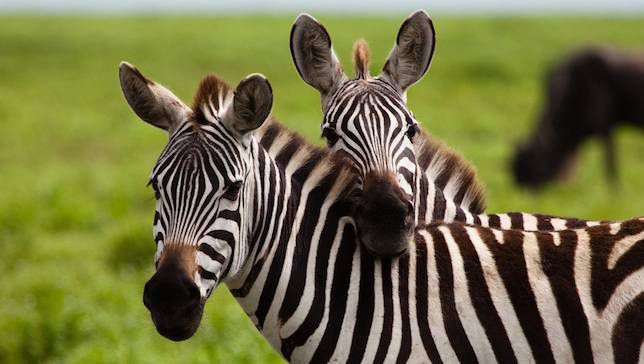
From there, journey to Lake Mburo National Park, a tranquil haven of rolling hills and acacia woodlands teeming with zebras, impalas, and elands, perfect for a relaxing game drive or nature walk.

Finally, conclude your trip in Jinja, the adventure capital of East Africa, where the mighty Nile begins its long journey to the Mediterranean — an ideal spot to unwind or try thrilling activities like white-water rafting and boat cruises.

From trekking with chimpanzees and gorillas to exploring vast savannahs filled with wildlife, and finally relaxing by the source of the Nile, each destination reveals a unique facet of Uganda’s natural beauty and charm. This journey perfectly captures the spirit of the Pearl of Africa — wild, scenic, and full of life.

Highlights

  • Gorilla Trekking
  • Chimpanzee Trekking
  • Batwa Cultural Interactions
  • Game Drives
  • Boat Cruises
  • Bird Watching
  • Zip Lining
  • Walking Safari
  • Kayaking
  • Whitewater Rafting
  • Nile Tubing
  • Quad Biking
  • Horseback Safari

Tour Plan

  • Day
    1

    Arrive In Uganda | Transfer To Kibale National Park | Visit Bigodi Swamp

    On arrival in Uganda, you will be welcomed and picked by our Kubwa Five Safaris guide, who will be holding an A4 paper with your name printed on it at Entebbe International Airport, and be transferred to Kibale National park, driving Southwest through the Albertine Escarpment of the great Western Rift Valley. You will  have lunch on your way.

    On arrival in Kibale National Park, you will be driven to Bigodi Wetland Sanctuary for a community walk and cultural interaction. It is a fascinating area, located in Magombe swamp.

    Bigodi walk

    This area is recognized for an extensive array of biodiversity among which are several primates species like the red colobus monkeys, baboons, black and white colobus monkeys, blue monkey grey cheeked, mangabey, vervet monkeys, red tailed monkeys and the L’Hoest monkeys. Additional mammals such as sitatungas, mongooses, bush pigs, otters plus bush bucks.

    Meals and overnight at Kibale Forest Camp/ Isunga Lodge/ Chimpanzee Forest Lodge.

  • Day
    2

    Chimpanzee Trekking | Transfer To Queen Elizabeth National Park | Boat Ride | Game Drive

    After breakfast, you will head out with your guide and a packed lunch to the park head offices for a briefing about the do’s and don’ts of chimpanzee trekking. You will start early and take about two to six hours, depending on the location of the chimps.

    6 Days Uganda Primates Trekking Mid-Range Adventure

    The opportunity to see chimpanzees in the wild is one of the most memorable of all safari activities. Getting close to these creatures that share so much of our DNA is a once-in-a-lifetime experience, and the excitement of walking through the forest and knowing that they are close will stay with you forever.

    After trekking, you will be transferred to Queen Elizabeth National Park. This is a huge park where wildlife and people coexist in harmony.

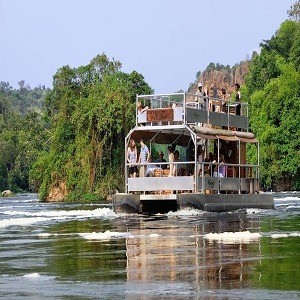
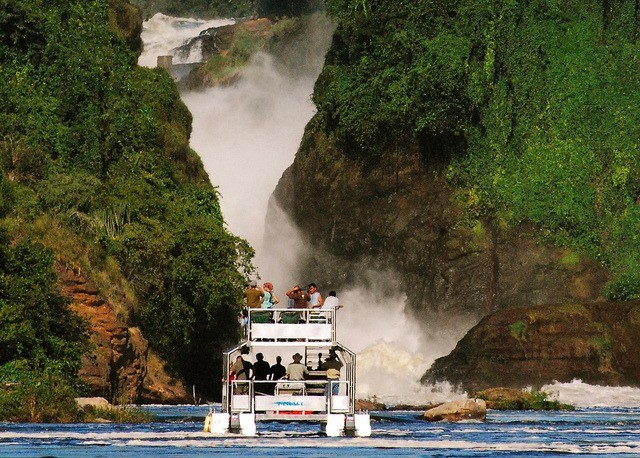
    On arrival in Queen Elizabeth National Park, you will go for a boat cruise on the Kazinga channel which connects Lake Edward and Lake George.

    Visit tours Travel Destinations Africa Big Trips Five Safaris

    Some of the best wildlife viewings are done on a boat cruise along the Kazinga Channel, passing squacco herons, pied kingfishers, large numbers of buffalo and hippo, basking crocodiles and very many different bird species and large mammals. This is one of the most memorable experiences from the park. Over 300 hippos are found in the lake.

    After the boat cruise, you will go for an evening game drive in Queen Elizabeth National Park aiming to catch the lions hunting in the evening. Lions usually hunt when the temperatures are cooler.  We also expect to see the Uganda kob, elephants, buffalos, warthogs, leopards and waterbucks.

    7 Days Breathtaking Mid-Range Safari In Uganda

    Meals and overnight at The Bush Lodge (Banda)/ Buffalo Safari Lodge/ Enganzi Game Lodge.

  • Day
    3

    Travel To Ishasha Sector | Transfer To Bwindi Impenetrable National Park | Batwa Cultural Interaction

    After an early morning breakfast, you will be transferred to Ishasha Sector for the tree-climbing lions on the Kasenyi Plains. Ishasha is located in the southern sector of Queen Elizabeth.

    Have a game drive in Ishasha, famous for its tree climbing lions. The Ishasha Sector is notably recognized for its resident tree-climbing lions which are an exceptional attraction.

    After the game drive in Ishasha it is time to move to Bwindi Impenetrable National Park, home of the famous mountain gorillas. You will have lunch en route.

    On arrival, you will check in at your lodge, then later in the evening,  you will head out for a community walk where you will visit the Batwa. This is an indigenous group of people that have lived in the forest for over 500,000 years. You will enjoy traditional dances and drama from them.

    Batwa In Uganda

    Meals and overnight at Agandi/ Rushaga Gorilla Lodge/ Bakiga Lodge.

  • Day
    4

    Gorilla Trekking | Transfer To Lake Mburo National Park | Evening Game Drive

    After breakfast, you will head out with your guide and a packed lunch to the park head offices for a briefing about the do’s and don’ts of gorilla trekking.

    Afterwards, you will head out for gorilla trekking through the misty rain forest. Trekking lasts two to six hours, depending on the location of the gentle giants. Make sure you carry enough water, sturdy shoes, non-flash cameras, and rain jackets.

    Spending time in the presence of mountain gorillas is a real privilege, so we are sure you will enjoy trekking deep into the forest to find them. This is one of the most memorable experiences you can have while on safari.

    At the end of this long and exciting adventure, you will be transferred to Lake Mburo. On arrival, you will check into your lodge and relax.

    Independence Lake Mburo Vacation

    Meals and overnight at Rwakobo Rock Lodge/ Arcadia Lodge Lake Mburo/ Mpogo Lodge.

  • Day
    5

    Walking Safari | Optional Activities (Biking Or Horse Riding Safari) | Evening Game Drive

    After an early morning breakfast, Have an early breakfast; head out for the morning walking safari in the park. A walking safari in Lake Mburo National Park is a magical way to experience the bush trails of the park.

    Destinations Safaris Big Trips Africa Five zebras

    You'll never get tired of going on a walking safari, where you'll leave behind the vehicle and step out into the wild. It can be a little nerve-wracking at first, but you'll be walking with an experienced guide and it's very safe. It can be a real thrill walking in this way, and most people fall in love with the experience.

    You will then go for any of the optional activities. You will choose between horse riding or bicycle safari each at a fee.

    After either activity, you will head back to your lodge for lunch. After lunch, you will go on a breathtaking evening game drive.

    Meals and overnight at Rwakobo Rock Lodge/ Arcadia Lodge Lake Mburo/ Mpogo Lodge.

  • Day
    06

    Transfer To Kampala | Equator Stopover | Relaxing

    After breakfast, you will be driven to Kampala. Along the way, you will have a stopover at the Equator in Masaka. You will be able to see where this imaginary line divides our planet into two equal hemispheres. Lunch, snacks, souvenirs and photographs may be taken here.

    Meals and overnight at Humura Resorts/ Fairway Hotel & Spa/ Cassia Lodge.

  • Day
    7

    Travel To Jinja | White Water Rafting While Discovering The Nile | Relaxing

    After breakfast, you will depart to Jinja with your packed lunch going through Mabira forest. The Mabira Forest is a rainforest area covering about 300 square kilometers. It is home for many endangered species like the primate Lophocebus Uganda.

    Distance from Kampala to Jinja is about 2 hours’ drive.

    On arrival in Jinja, you will go for White Water Rafting on the rapids which are an adventure and an unforgettable experience. The Nile River finds its source in Jinja where it starts the 4000 km through different African countries.

    32 Day Thrilling African Budget Safari

    After white water rafting, you will check in at your hotel and relax.

    Meals and overnight at Adrift River Club/ Cisand Suites Hotel Jinja/ Hotel Paradise On The Nile.

  • Day
    8

    The Last Day With Us | Transfer To The Airport | Fly Back Home

    After having a delightful breakfast, you will be transferred to Entebbe International Airport for your scheduled flight back home.

    All good things must come to an end, and your time with us on safari in Uganda will now draw to a close. We're sure that you've had a wonderful time.

Inclusions

  • One gorilla permit per person to be secured and paid for well in advance
  • One chimpanzee permit per person to be secured and paid for well in advance
  • Services of an expert guide
  • Airport transfer (Airport pick up and drop off)
  • Daily meals (breakfast, lunch, and dinner)
  • Ground transportation (4×4 safari Landcruiser / minivan with pop-up tops)
  • Full board accommodation and en route meals as indicated in the itinerary
  • Park fees and relevant government taxes.

Exclusions

  • Airfares
  • Visa fees
  • Personal insurance
  • Expenses of personal nature, such as drinks, tips, laundry, telephone, and cigarettes
  • Accommodation and meals not indicated in the itinerary

Accommodation

Throughout this exciting journey, you will be accommodated in a variety of accommodations.

The accommodation is appropriate and will be determined by your budget. Kubwa Five Safaris offers the best service at every level. Kubwa Five Safaris reserves the right to substitute comparable or superior accommodations. If an equivalent standard hotel is not available, Kubwa Five Safaris may substitute the next best quality hotel or suggest a superior for an additional fee. Hotels and lodges provide free Wi-Fi.

Please see the list below for more information on the safari lodges in each national park/destination included in this tour package.

How to Get There

Arrival by airplane

Please book your flight to arrive at Entebbe International Airport.

Kubwa Five Safaris will cater for your Airport/Hotel transfers i.e pick-ups and drop-offs provided they are to happen within your safari days with us.

Visa Applications

Please write to us for more details.

Frequently Asked Questions (FAQs)

1. What is included in the safari package cost?

The cost covers all accommodations, meals as specified, park entrance fees, game drives, gorilla and chimpanzee permits, boat cruises, guide services, and ground transportation throughout the safari.

2. Are gorilla and chimpanzee trekking permits included?

Yes. Gorilla trekking permits (Bwindi) and chimpanzee trekking permits (Kibale) are included in the total cost of the trip.

3. What should I pack for this 8-day safari?

Essentials include lightweight clothing, hiking boots, a rain jacket, insect repellent, sunscreen, binoculars, a camera, a reusable water bottle, and personal medication. A full packing list will be shared upon booking.

4. Is this safari suitable for families with children?

Yes, but children under 15 are not allowed to participate in gorilla and chimpanzee trekking. We offer alternative activities for young children on those days.

5. What type of accommodations are provided?

We use clean, safe, and comfortable lodges. All accommodations have private self-contained rooms; bathrooms are inside the rooms/tents.

6. Can dietary requirements be accommodated?

Yes. We cater to most dietary needs, including vegetarian, vegan, gluten-free, and others. Please let us know your preferences in advance.

7. How physically demanding is the safari?

While most of the safari involves vehicle-based game drives and scenic travel, gorilla and chimpanzee trekking require moderate physical fitness due to hiking in mountainous and forested terrain.

8. Is travel insurance required?

Yes. We strongly recommend that all participants have comprehensive travel insurance covering medical emergencies, trip cancellations, and lost luggage.

9. What is the group size?

Our private safari is tailored to provide an intimate and immersive experience for small groups. We accommodate groups of 4 to 24 travelers, ensuring that each participant receives personalized attention and a unique safari experience.

10. Can the itinerary be customized?

Yes, we can tailor this safari to fit your schedule, interests, or accommodation preferences. Contact us for a personalized quote.

Why You Should Visit Uganda?

  • Uganda

Uganda is known as "The Pearl of Africa" with good cause. It is one of the few places in the world where you may enjoy safaris, mountains, forests, rivers, and rich culture all in one trip.

It is one of just three nations where you can journey to observe wild mountain gorillas, particularly in Bwindi Impenetrable National Park. Meeting these gentle giants is an unforgettable experience.

The Nile River's source is in Uganda! Jinja, Africa's adventure capital, offers whitewater rafting, kayaking, bungee jumping, and relaxing sunset cruises.

What are Gorilla Tracking Rules And Regulations?

Before Departing On Your Gorilla Trekking:

  • A maximum number of eight visitors may visit a group of habituated mountain gorillas in a day. This minimizes behavioral disturbance to the gorillas and the risk of their exposure to human-borne diseases.
  • Always wash your hands before you head out to the gorillas.

On The Way To The Gorillas:

  • Please always keep your voices low. You will also be able to observe the great birdlife and other wildlife in the forest.
  • DO NOT leave rubbish in the park. Whatever you bring into the forest should be carried back out with you.
  • You will be taken to where the guides observed the gorillas the day before. From there you will follow the gorilla’s trail to find them. Look out for the gorilla’s nesting sites along the way!
  • When you approach the mountain gorillas, the guides will inform you to get ready.

When You Are With The Gorillas:

  • A seven-meter (21 feet) distance should be tried to be observed at all times from the gorillas. The further back you are, the more relaxed the group will be.
  • You must stay in a tight group whey you are near the gorillas.
  • Keep your voices down at all times. However, it is okay to ask the guide questions.
  • Do not smoke, drink, or eat when you are near the gorillas. Eating or drinking inevitably will increase the risk of food/drink morsels/droplets falling, which could increase the risk of transmission of diseases.
  • Sometimes the gorillas charge. Follow the guides example (crouch down slowly, do not look the gorillas directly in the eyes, and wait for the animals to pass). Do not attempt to run away because that will increase the risk.
  • Flash photography is not permitted! When taking pictures move slowly and carefully.
  • Do not touch the gorillas. They are wild animals.
  • The maximum time you can spend with the gorillas is one hour. However, if the gorillas become agitated or nervous, the guide will finish the visit early.
  • After the visit keep your voices down until you are 200 meters away from the gorillas.

General Health Rules:

  • Remember that mountain gorillas are very susceptible to human diseases. The following rules are ways to minimize the risk your visit might pose to them.
  • Respect the limits imposed on the number of visitors allowed with the gorillas each day. This minimizes the risk of disease transmission and stress to the group.
  • If you are feeling ill, or you are carrying a contagious disease, volunteer to stay behind. An alternate visit will be arranged for you, or you will be refunded your money.
  • If you feel the urge to cough or sneeze when you are near the gorillas, please turn your head away and cover your nose and mouth in order to minimize the spread of bacteria or viruses.
  • Always stay seven meters (21 feet) away from the gorillas. This is to protect them from catching human diseases.
  • Do not leave any rubbish (eg. food wrappers) in the park; foreign items can harbor diseases or other contaminants.
  • If you need to go to the toilet while in the forest, please ask the guide to dig you a hole with his panga. Make sure the hole is 30 centimeters deep and fill it in when you are finished.

What To Bring On Your Gorilla Safari:

  • Wear comfortable hiking shoes suitable for steep muddy slopes.
  • Put on earplugs for those who feel uncomfortable with the jungle sounds.
  • Carry a packed lunch and enough drinking water.
  • Carry rain gear, sunscreen lotion, a hat (as the weather is unpredictable), and insect repellent.
  • Bring a photo of a film camera. Using a flashlight is not permitted so we recommend using films of 400-800 ASA.

Frequently Asked Question about Uganda

  1. When is the best time of year to visit Uganda?

Uganda is accessible at any time of year. Mountain gorilla trekking is on most tourists’ bucket lists, and permits are available all year.

Uganda is a tropical country that receives a lot of rain. The wettest months are March to May, which can make travel difficult. During the Wet Season some roads become extremely muddy and difficult to navigate.

The dry season months of June to August and December to February provide the best travel conditions, and are also ideal for Ugandan gorilla trekking. The dry season months are also ideal for general wildlife viewing in savannah reserves because animals congregate around rivers and waterholes, and the grass is shorter, making spotting easier.

2. How are the wildlife viewing opportunities in Uganda?

Uganda is home to some of the best wilderness areas on the African continent. Uganda unquestionably has some of the best and most beautiful wildlife in the world.

Uganda has a diverse wildlife population and is home to the big five game animals. Queen Elizabeth National Park, Murchison Falls National Park, Kidepo Valley National Park, and Lake Mburo National Park are the best places in Uganda to see wildlife.

A wildlife viewing experience in Uganda is well worth your time and money, and it will leave you with lasting memories. Uganda, unspoiled and raw, offers a genuine sense of off-the-beaten-path adventure.

Uganda is endowed with numerous natural and cultural wonders that are largely unknown to the general public. Uganda is still relatively unknown, with the majority of tourists interviewed stating that this was their first visit and promising to return with their friends. With an astounding number of hippos, rhinos, lions, leopards, elephants, gorillas, chimps, giraffes, buffalos, and other animals thriving in Uganda’s national parks, Uganda is undeniably endowed.

Uganda is home to over 350 different species of mammals of various sizes. They include large mammals such as gorillas, rhinos, hippos, chimps, buffaloes, lions, leopards, elephants, zebras, giraffes, and warthogs, as well as small mammals such as bats, moles, and shrews. These mammals are classified into three groups: primates (gorillas, chimps, monkeys, and others), carnivores (leopards, African wildcats, cheetahs, and others), and herbivores (Buffalos, elephants, Giraffes and more).

3. Is Uganda safe for tourists?

When traveling to urban areas, travelers should take the usual precautions for their safety and try to avoid traveling at night. Petty crime is a problem in urban areas, just as it is in all poor countries. Each national park is equipped with security personnel in order to guarantee the tourists’ well-being.